Your Vision Matters More Than You Think
If you play sports or have kids who do, this is something I want you to think about for a moment:
How well are you protecting your eyes?
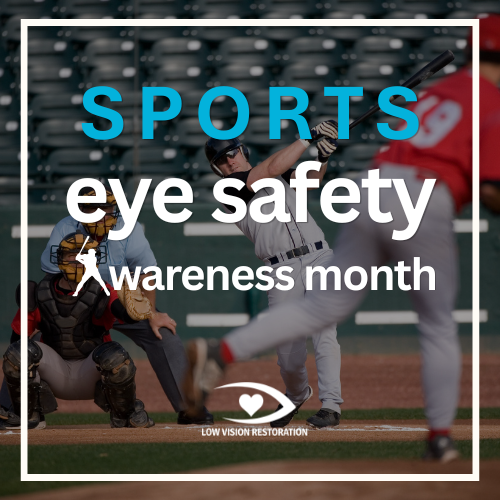
During Sports Eye Health Awareness Month, I like to remind my patients that vision is not just about seeing clearly. It is also about reacting quickly, staying safe, and continuing to do the things you enjoy without interruption.
At Low Vision Restoration, I often meet people who never expected an eye injury to happen, until it did.
Eye Injuries Can Happen Fast
In sports, things move quickly. A ball, an elbow, or even a simple accident can cause an eye injury in seconds.
Some injuries are minor, but others can have lasting effects on your vision.
The good news is that many of these injuries are preventable. With the right awareness and protection, you can significantly reduce your risk.
What I Commonly See in Sports-Related Eye Injuries
Over the years, I have seen a range of sports-related eye injuries. Some of the more common ones include:
- Scratches on the surface of the eye, also called corneal abrasions
- Blunt trauma from impact
- Damage to the retina
- Irritation or damage from sun exposure
Even injuries that seem small at first can become more serious if they are not addressed right away.
It’s Not Just Contact Sports
A lot of people assume eye injuries only happen in high-contact sports, but that is not the case.
I have seen injuries from basketball, baseball, and even casual games. Anything involving fast movement, close contact, or equipment can put your eyes at risk.
That is why awareness and preparation matter.
Let’s Talk About Eye Protection
One of the biggest misconceptions I hear is:
“I already wear glasses, so I am protected.”
Regular glasses or sunglasses are not designed for impact. In some cases, they can break and make an injury worse.
If you are playing sports regularly, I recommend using protective eyewear made with polycarbonate lenses. These are more durable and designed to handle impact safely.
For outdoor activities, there is another layer of protection that is just as important. Make sure your lenses provide full UVA and UVB protection.
Sunlight can reflect off surfaces like water, sand, and even snow. That reflected light can increase your exposure to harmful UV rays and put additional strain on your eyes. Over time, this can contribute to long-term damage, especially if your eyes are unprotected.
Wearing lenses with proper UV protection helps reduce this risk and keeps your eyes more comfortable, especially during extended time outdoors.
It is a simple upgrade that can make a big difference.
Simple Ways to Protect Your Eyes
Here are a few practical steps I often share with my patients:
- Wear proper protective eyewear
Choose gear designed specifically for your sport. - Stay on top of your eye exams
Clear vision helps you perform better and react faster. - Protect your eyes from the sun
Use lenses with full UVA and UVB protection, especially around water or snow where sunlight reflects and increases exposure. - Pay attention after an injury
If something feels off, such as blurred vision, pain, or sensitivity, do not ignore it. Get it checked.
If You Already Have Vision Challenges
If you already have a vision condition, protecting your remaining vision becomes even more important.
At Low Vision Restoration, my goal is to help you maintain your independence and continue doing the activities you enjoy safely and confidently.
A Quick Reminder
Sports are meant to be fun. They keep us active, connected, and engaged.
Your vision is something you cannot afford to take for granted.
Taking a few simple precautions now can help you avoid serious problems later.
If you have had an eye injury, noticed changes in your vision, or want to make sure you are protecting your eyes the right way, we are here to help. Contact our office to schedule a free low vision telephone consultation and learn more about your options.
Call 612-729-3030 or visit LowVisionOfMN.com. Serving the Twin Cities metro and Greater Minnesota.