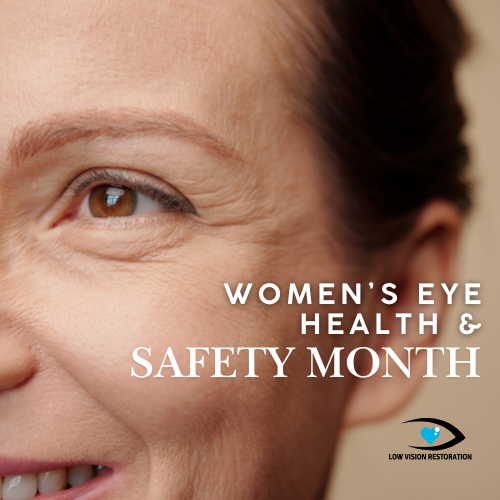
Every April, Women’s Eye Health and Safety Month serves as an important reminder: your vision is essential to how you live, connect, and experience the world.
For many women, eye health often gets pushed aside while managing work, family, and daily responsibilities. But prioritizing your vision is one of the most important steps you can take for your long-term well-being.
Why Women Are at Higher Risk for Vision Loss
Women are more likely than men to experience vision impairment and certain eye conditions. This increased risk is influenced by several factors:
- Women tend to live longer, increasing exposure to age-related eye conditions
- Hormonal changes can impact eye health over time
- Autoimmune conditions, which are more common in women, may affect vision
Because of this, women face a higher likelihood of developing conditions such as macular degeneration, glaucoma, cataracts, and dry eye syndrome.
Common Eye Conditions Affecting Women
Throughout different stages of life, women may experience a variety of vision challenges:
- Dry eye syndrome, especially during hormonal changes
- Blurred or fluctuating vision, particularly during pregnancy
- Macular degeneration, which impacts central vision
- Glaucoma, often developing without early warning signs
- Cataracts, leading to cloudy or dim vision
Many of these conditions progress gradually, making regular eye exams essential.
The Importance of Early Detection
Early detection is one of the most effective ways to protect your vision.
Routine comprehensive eye exams can identify issues before symptoms become noticeable. When caught early, many conditions can be treated or managed to slow progression and preserve sight.
If you’re already experiencing vision changes, it’s not too late to take action.
Simple Ways to Protect Your Eye Health
Protecting your vision doesn’t have to be overwhelming. Small, consistent steps can make a lasting impact:
- Stay up to date with comprehensive eye exams and your medical eye care team
- Wear sunglasses with 100% UV protection, especially in bright or reflective environments
- Maintain a balanced, nutrient-rich diet with leafy greens and omega-3s
- Manage chronic conditions like diabetes, blood pressure, and cholesterol
- Use protective eyewear when needed
- Avoid smoking
For those living in environments with strong seasonal glare—like bright sun or reflective snow—taking extra steps such as using contrast-enhancing lenses and optimizing indoor lighting can significantly improve comfort and visibility.
Understanding Low Vision
Low vision refers to significant vision loss that cannot be fully corrected with standard glasses, contact lenses, or surgery.
But low vision care is not about limitations. It is about possibilities.
Specialized care focuses on helping you maximize your remaining vision so you can continue doing what matters most, whether that is reading, recognizing faces, or navigating daily life with confidence.
At Low Vision Restoration, care is tailored to your personal goals. Through customized evaluations and prescribed solutions, patients are supported with tools designed to improve both function and independence.
How Low Vision Care Can Help
Low vision care focuses on helping people make the most of their remaining vision.
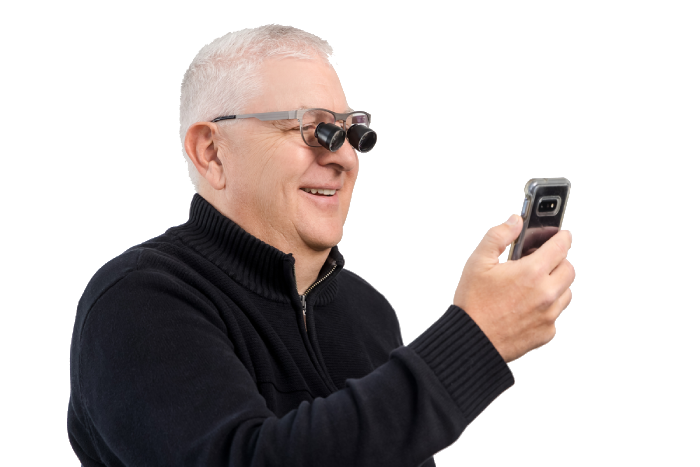
If you’re following a medical treatment plan but still struggle with daily tasks, it may be time to explore specialty low vision eyewear. Tools like bioptic telescope glasses, high-powered reading glasses, and contrast-enhancing filters can help you read, drive, and stay connected. Early evaluation can preserve independence and broadens your options.
Ready to learn more about your options? We offer a free phone consultation to discuss your goals and see if our specialized services are right for you.
Your Vision Matters
Women’s Eye Health and Safety Month is more than a reminder. It is an opportunity to take action.
Your vision supports your independence, your relationships, and your quality of life. Taking care of your eyes means taking care of yourself.
If you have noticed changes in your vision or have not had an eye exam recently, now is the time to prioritize your eye health.
Low Vision Restoration is here to help you see clearly, live fully, and move forward with confidence.
We offer a free phone consultation to discuss your goals and determine if specialized low vision services are right for you.
Call 612-729-3030 or visit LowVisionOfMN.com. Serving the Twin Cities metro and Greater Minnesota.
Life after vision loss is possible with the right tools and support.
Dr. Chris Palmer