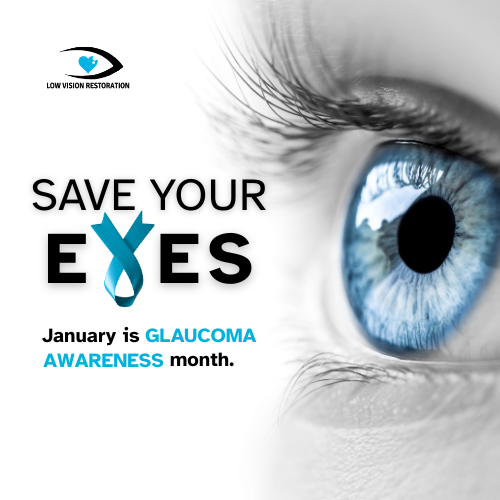
Every January, Glaucoma Awareness Month shines a light on one of the leading causes of permanent vision loss. Glaucoma develops gradually and often without warning, which is why many people do not realize they have it until damage has already occurred. At Low Vision Restoration, Dr. Palmer works closely with people affected by glaucoma-related vision loss, helping them continue living full and independent lives.
What Is Glaucoma?
Glaucoma is not just one disease. It is a group of conditions that damage the optic nerve, which carries visual information from the eye to the brain. This damage is often linked to higher pressure inside the eye, although glaucoma can occur even when eye pressure is normal.
One of the greatest challenges with glaucoma is that early vision loss affects peripheral (side) vision first, which can be very difficult to notice. Over time, vision may narrow or feel patchy, and once vision is lost, it cannot be restored.
Who Faces a Greater Risk?
While glaucoma can affect anyone, the chance of developing it increases if you:
- Are age 60 or older
- Have a parent or sibling with glaucoma
- Are African American, Hispanic/Latino, or Asian
- Have diabetes or certain other health conditions
- Have had a previous eye injury
- Have elevated eye pressure
Because early stages are usually silent, routine eye exams are essential to protecting your vision, especially if you are at higher risk.
Why Awareness Matters
There is currently no cure for glaucoma. However, early treatment such as prescription drops, laser procedures, or other surgery can help slow the disease and protect remaining vision. Unfortunately, many people wait until they notice changes before seeking care, and by then, significant damage may already be present.
Glaucoma Awareness Month encourages people to:
- Schedule regular eye examinations
- Understand their personal risk factors
- Take glaucoma medications consistently
- Stay informed about eye health
Awareness leads to earlier diagnosis, and earlier diagnosis protects sight.
Living Well With Glaucoma-Related Vision Loss
Some people continue to lose vision even with appropriate glaucoma treatment. When that happens, low vision care can make an important difference.
At Low Vision Restoration, Dr. Palmer helps patients:
- Maximize remaining vision
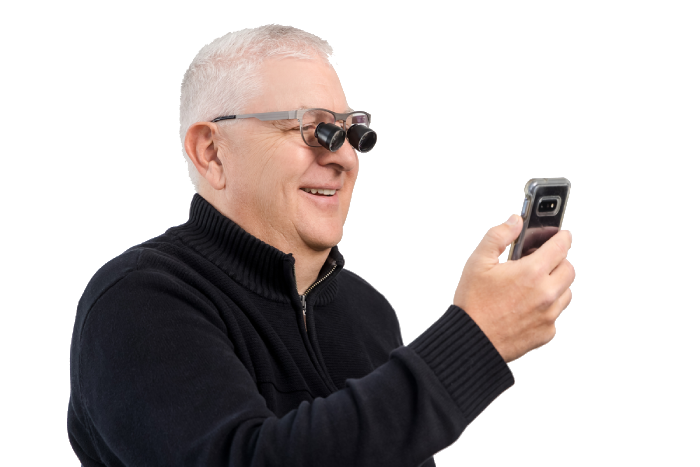
- Use low vision tools and technology
- Improve safety and independence
- Continue meaningful activities like reading, working, hobbies, and social involvement
The goal is to help people use the vision they still have so they can continue living the lives they want.
What You Can Do This Month
January is the perfect time to:
- Schedule a comprehensive, dilated eye exam
- Encourage older family members and friends to do the same
- Learn your glaucoma risk
- Seek low vision care if vision loss is affecting daily life
Protecting vision starts with awareness and action.
If you or someone you love is living with glaucoma and noticing changes in vision, you are not alone.
At Low Vision Restoration in Minnesota, Dr. Palmer works closely with each patient to create personalized solutions that protect independence and support a meaningful quality of life. Glaucoma may change how you see, but with the right care and tools, it does not have to define how you live.
Call 612-729-3030 or visit LowVisionOfMN.com. Serving the Twin Cities metro and Greater Minnesota.