By Dr. Chris Palmer
September is Healthy Aging Month, a time to recognize the importance of caring for our health and finding ways to stay active and engaged as we grow older. Healthy aging is about more than physical health. It also includes maintaining the ability to keep doing the things that bring meaning and enjoyment to everyday life.
For many older adults, vision plays an important role. At my practice, Low Vision Restoration, with offices in Coon Rapids and Inver Grove Heights, I work with people throughout Minnesota whose vision loss makes everyday activities more difficult. Aging itself does not automatically lead to significant vision loss, but the risk of certain eye diseases and conditions increases with age. Conditions such as age-related macular degeneration, glaucoma, diabetic retinopathy, and cataracts can affect how clearly a person sees and may eventually interfere with reading, driving, recognizing faces, watching television, pursuing hobbies, or managing everyday tasks.
Healthy Aging Includes Healthy Vision
Taking care of your overall health is an important part of aging well, and your vision deserves attention too. Regular eye exams can help identify eye diseases and vision changes that may require treatment or monitoring. The National Eye Institute recommends regular dilated eye exams and healthy habits to help protect vision as we age.
But what happens when someone is already experiencing significant vision loss? That is where low vision care can make an important difference, and it’s a question I help patients work through every day.
What Is Low Vision?
Low vision is vision loss that cannot be fully corrected with regular glasses, contact lenses, medication, or surgery and that interferes with everyday activities. Someone with low vision may have difficulty reading, recognizing faces, seeing road signs, navigating unfamiliar environments, or performing tasks that were once routine.
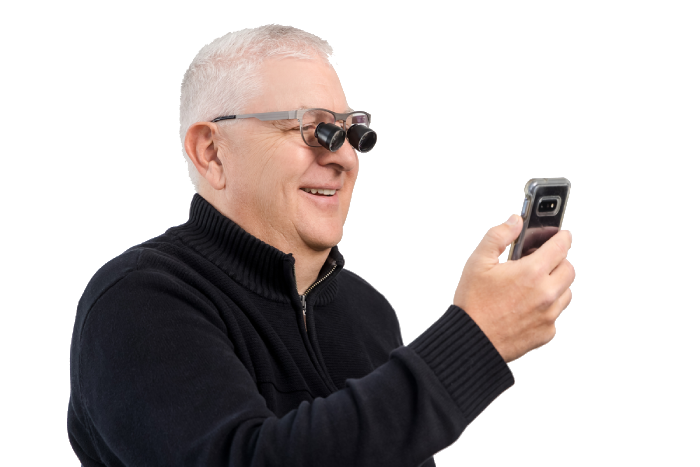
Low vision does not mean a person has to stop doing the things they enjoy. Instead, low vision care focuses on helping people make the most of the vision they have. A low vision evaluation assesses how vision loss affects a person’s daily life and identifies ways to make tasks easier. Depending on a person’s needs, solutions may include specialized optical devices, magnification, telescopic technology, lighting recommendations, or other personalized strategies.
Low Vision Care Can Help You Keep Doing the Things You Love
One of the most important goals of healthy aging is keeping up the things you love for as long as possible.
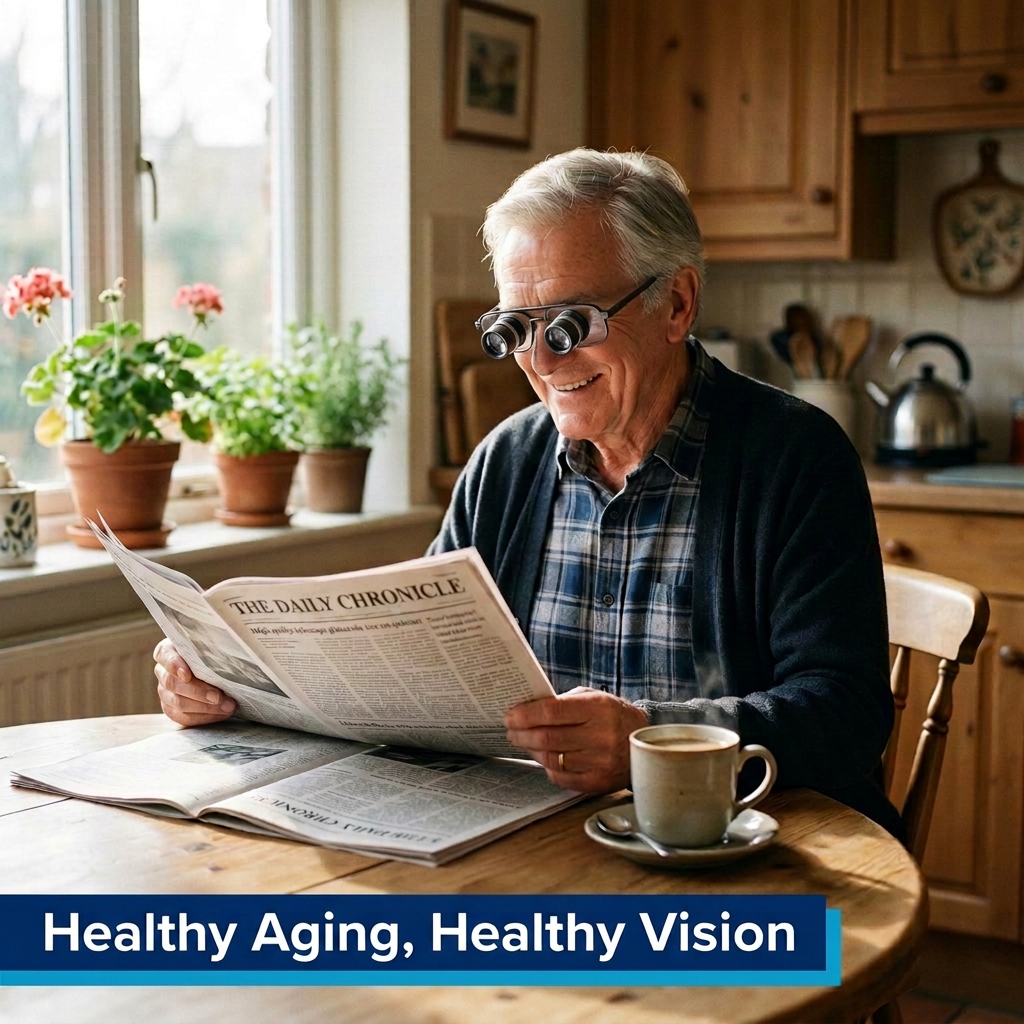
Vision loss can sometimes make people feel as though they have to give up activities they enjoy. Reading a favorite book, preparing a meal, watching television, playing cards, seeing a loved one’s face, or getting around the community may become more challenging. Personalized low vision care can help people explore ways to continue participating in those activities.
At Low Vision Restoration, I take a personalized approach to low vision care. Rather than simply asking whether someone can see an eye chart, I consider how a person’s vision affects the things they actually want and need to do. That distinction matters. The goal isn’t necessarily to restore vision to what it was years ago. The goal is to help each person use their remaining vision as effectively as possible, so they can keep doing the things that bring them joy.
Healthy Aging Doesn’t Mean Doing Everything the Same Way
Aging often brings changes and adjustments. When vision loss is part of that journey, finding new ways to approach familiar activities can help you stay engaged in the life you love.
For example, someone who struggles to read because of central vision loss may benefit from a different magnification strategy. Someone who has difficulty seeing while driving may need to explore specialized options and discuss whether driving remains appropriate. Another person may simply need better lighting or a solution that makes it easier to identify faces or read medication labels.
No single low vision solution works for everyone. Low vision care should be personalized to the person, their vision, and their lifestyle.
Take a Proactive Approach to Aging and Vision
Healthy Aging Month is a good reminder that self-care includes paying attention to changes in your vision.
If you notice that you are:
- Struggling to read even with your current glasses
- Having difficulty recognizing people’s faces
- Needing significantly more light to see
- Having trouble seeing road signs
- Finding everyday activities increasingly difficult because of your vision
- Giving up hobbies or activities because you cannot see well enough
Talk with your eye care professional about what may be contributing to the change. If you have already been diagnosed with significant vision loss, ask whether low vision care may be appropriate. You may have more options than you realize.
There Is Life After Vision Loss
Healthy aging is not about preventing every change that comes with getting older. It is about finding ways to maintain your health, your connections, and your quality of life as circumstances change, while still doing the things you love.
For people living with vision loss, low vision care can be an important part of that process. I’m proud that my team and I at Low Vision Restoration, serving patients across Minnesota and the Twin Cities from our Coon Rapids and Inver Grove Heights offices, get to help people explore personalized solutions designed around their individual vision needs and daily activities.
If vision loss is making everyday life more challenging, you do not necessarily have to give up the activities that matter to you.
There is life after vision loss.
Call 612-729-3030 today to schedule your free low vision phone consultation with our team at Low Vision Restoration, Dr. Palmer’s practice serving Minnesota from our Coon Rapids and Inver Grove Heights offices, and let’s talk about how personalized low vision care can help you keep doing the things you love.