September is National Guide Dog Month, and I look forward to it every year. It’s a chance to celebrate the incredible partnerships between seeing-eye dogs and the people who are blind or visually impaired. For many people, a seeing-eye dog can provide greater confidence and mobility, helping them keep doing the things they love out in the world.
But here’s something I want you to know: what “doing the things you love” looks like is different for everyone. Some people use a seeing-eye dog or a white cane to get around safely. Others rely on specialized glasses, magnification, helpful technology, better lighting, or other low vision strategies to keep doing what matters most to them, whether that’s reading the newspaper, seeing a grandchild’s face clearly, or enjoying a favorite hobby. At my practice, Low Vision Restoration, with offices in Coon Rapids and Inver Grove Heights, I believe vision loss does not have to mean giving up on the life you love.
How Seeing Eye Dogs Support People With Vision Loss
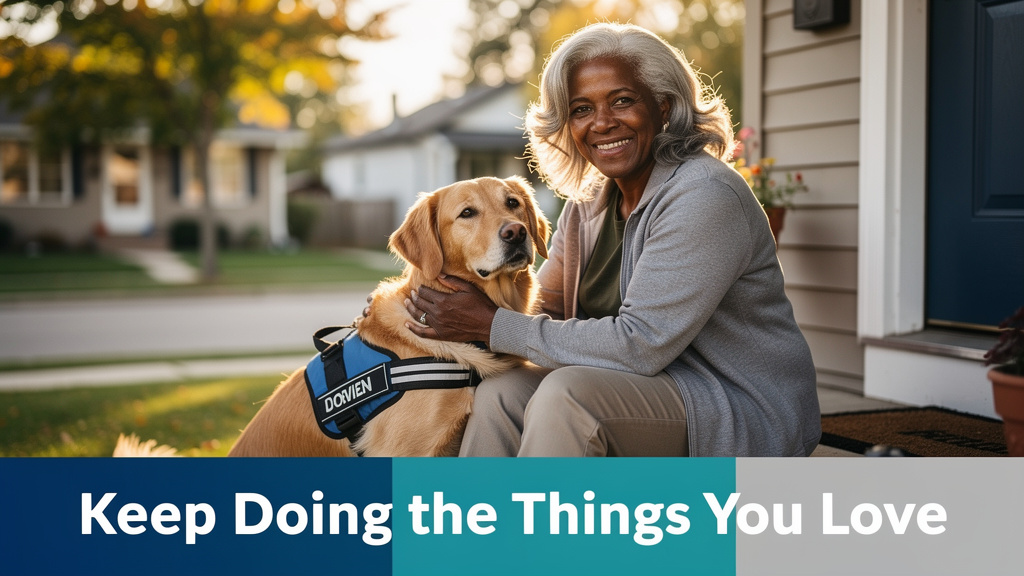
Seeing eye dogs are specially trained to help their handlers move through the world more safely and confidently. They can help avoid obstacles, follow familiar routes, and travel through the community so their handlers can keep doing the things they love, on their own terms.
A seeing-eye dog is not simply a pet or a companion- the bond between a seeing-eye dog and its handler is a true working partnership built on training, communication, and trust. It’s a beautiful thing to witness. And while a seeing-eye dog can be a wonderful mobility solution for some of my patients, it’s important to know that it’s not the only path to a full, active life after vision loss.
Low Vision Care Can Help You Make the Most of Your Remaining Vision
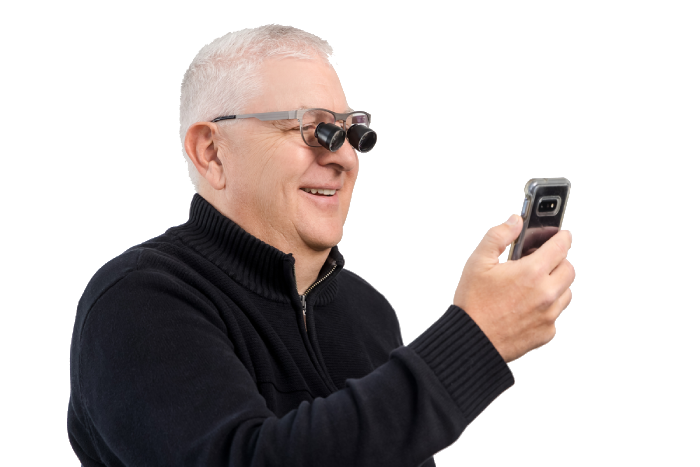
Many of my patients still have useful vision, even when ordinary glasses, medication, or surgery can no longer help enough with everyday activities. That’s where low vision care comes in- it focuses on helping you use the vision you do have so you can keep doing the things you love.
Depending on your needs, a low vision evaluation may uncover new ways to make things easier, such as:
- Reading books, mail, menus, or prescription labels
- Watching television
- Recognizing faces
- Seeing road signs and other objects at a distance
- Using a computer or smartphone
- Enjoying hobbies
- Navigating familiar environments
Getting around at home and in the community with confidence
Low vision care may include customized glasses, magnification, telescopic devices, lighting recommendations, or other strategies built entirely around your personal goals. In fact, the Minnesota Department of Human Services describes Low Vision Restoration as providing full low vision assessments and glasses tailored to the specific activities that matter most to you.
There Is More Than One Path Forward
Here’s what I tell every patient I see: no single solution works for everyone with low vision. That’s one of the most important things to understand about living with vision loss.
You might use several different tools depending on where you are and what you’re trying to do. Maybe you’ll use specialized glasses for reading, helpful technology for viewing a computer screen, and a cane or seeing-eye dog for getting around your neighborhood. The goal isn’t to find one solution that does everything- the goal is to find the right combination of solutions that lets you keep doing the things you love.
Guide Dogs for the Blind also recognizes how important it is for low vision professionals, orientation and mobility specialists, rehabilitation services, and seeing-eye dog programs to work together. Each of these professionals plays a valuable role in helping people with vision loss build the skills and strategies they need to stay active and engaged in life, and I’m proud to be part of that larger team here in Minnesota.
Life After Vision Loss Can Still Be Full of the Things You Love
National Guide Dog Month is a wonderful time to celebrate the dogs, trainers, and people who make seeing-eye dog partnerships possible. It’s also a reminder that vision loss doesn’t have to mean giving up the activities that bring you joy.
Whether your goal is to read more comfortably, recognize the faces of loved ones, see the television clearly again, pursue a favorite hobby, or move through Minneapolis and your community with greater confidence, low vision care may offer solutions worth exploring.
There is life after vision loss.
Call 612-729-3030 today to schedule your free low vision phone consultation with Low Vision Restoration, Dr. Palmer’s practice serving Minnesota from our Coon Rapids and Inver Grove Heights offices, and let’s talk about how personalized low vision care can help you keep doing the things you love.