June is Cataract Awareness Month, and it’s the perfect time to talk about one of the most common causes of vision changes as we age.
As a low vision doctor, I often meet folks who have noticed their vision becoming blurry, cloudy, or less vibrant over time. Many assume they simply need a stronger glasses prescription, but in some cases, cataracts may be part of the reason. Cataracts are incredibly common, and the good news is that they are also highly treatable.
What Are Cataracts?
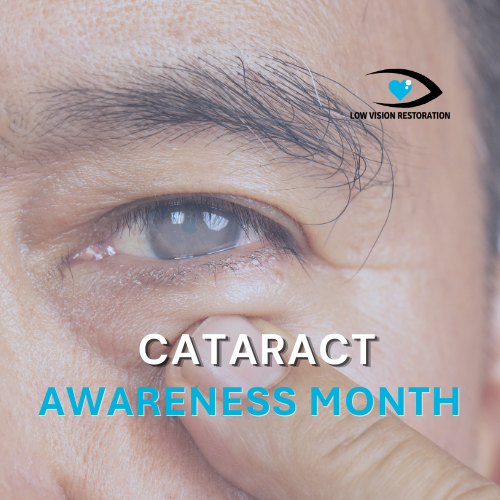
A cataract occurs when the natural lens inside the eye becomes cloudy. Think of it like looking through a foggy window. The clouding develops gradually and can make everyday activities such as reading, driving, recognizing faces, or enjoying hobbies more difficult.
Cataracts are most often associated with aging, but they can also develop due to factors such as diabetes, certain medications, eye injuries, smoking, prolonged UV exposure, or family history.
Common Signs of Cataracts
Because cataracts usually develop slowly, many folks don’t notice the changes right away. Some of the most common symptoms include:
- Blurry or cloudy vision
- Difficulty seeing at night
- Increased sensitivity to light and glare
- Seeing halos around lights
- Colors appearing faded or yellowed
- Frequent changes in eyeglass prescriptions
- Double vision in one eye
If any of these symptoms sound familiar, it’s important to schedule a comprehensive eye examination.
Why Cataract Awareness Matters
Many people are surprised to learn how common cataracts are. In fact, cataracts are one of the leading causes of vision impairment worldwide and affect millions of older adults. Awareness is important because early detection allows eye care professionals to monitor changes and help determine the right time for treatment.
Routine eye exams play a critical role in protecting your vision. Even if your eyesight seems stable, regular evaluations can identify cataracts and other eye conditions before they significantly affect your daily life.
Can Cataracts Be Prevented?
While aging is the biggest risk factor, there are steps that may help support long-term eye health and potentially reduce your risk:
- Wear sunglasses that block UV rays when outdoors
- Avoid smoking
- Manage health conditions such as diabetes
- Eat a healthy diet rich in fruits and vegetables
- Schedule regular eye examinations
Healthy lifestyle choices benefit not only your eyes but your overall well-being.
What Happens If Cataract Surgery Doesn’t Fully Restore Vision?
One important thing I discuss with many of my patients is that cataracts is not always the only cause of vision loss.
Sometimes folks have underlying eye conditions such as macular degeneration, diabetic retinopathy, glaucoma, or other retinal conditions. In these situations, cataract surgery may improve vision, but some visual challenges can remain.
This is where low vision care can make a meaningful difference.
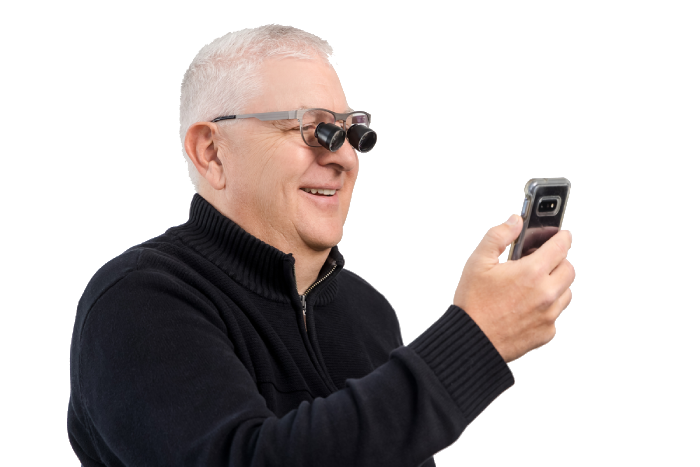
At Low Vision Restoration, I work with folks who continue to struggle with vision loss even after traditional treatments have been exhausted. Through specialized evaluations, customized solutions, and low vision rehabilitation strategies, my goal is to help people maximize the vision they still have and maintain their independence.
Serving Minnesota Families with Low Vision Care
If you or a loved one is experiencing vision changes from cataracts, macular degeneration, diabetic retinopathy, glaucoma, or another eye condition, know that you don’t have to navigate those challenges alone.
I proudly serve patients throughout Minnesota and work closely with folks who are looking for ways to continue reading, enjoying hobbies, recognizing faces, and staying active in their communities despite vision loss.
Schedule a Consultation
This Cataract Awareness Month, take a proactive step toward protecting your sight.
If you’re concerned about cataracts, experiencing vision loss, or have been told that nothing more can be done for your vision, I invite you to contact Low Vision Restoration. Together, we’ll explore options that may help you maintain independence and improve your quality of life.
Call today to learn how low vision rehabilitation may help you make the most of the vision you have.
Dr. Chris Palmer
There is life after vision loss.